
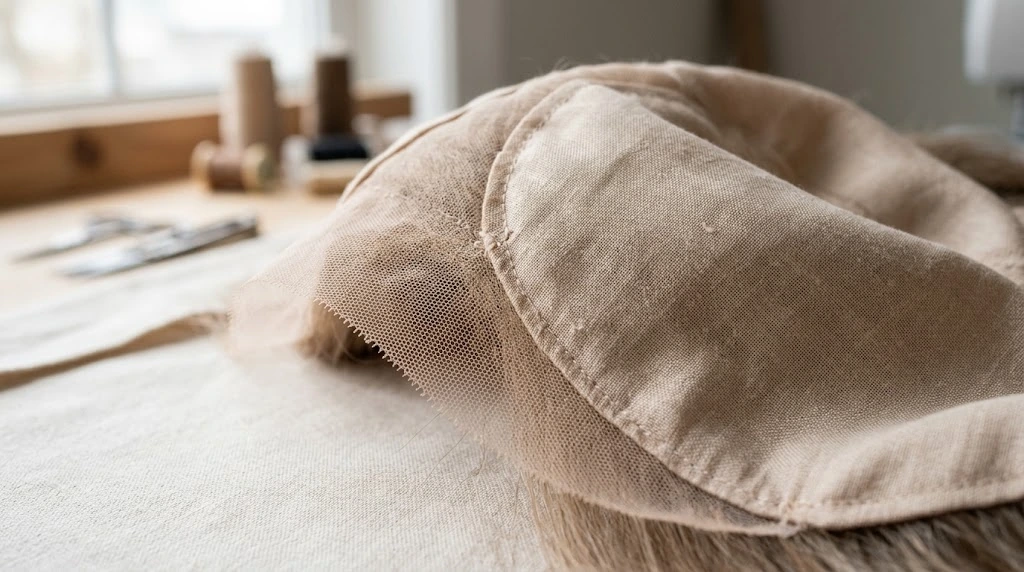
Best Wigs for Sensitive Scalps: Hypoallergenic Caps & Breathable Materials That Won’t Itch
If a wig feels hot, tight, scratchy, or itchy within the first hour, the hair itself may not be the problem. Cap construction, friction, heat, fit, adhesives, and products touching the scalp can all change how comfortable a wig feels during real wear.
For sensitive scalps, the best wig is rarely the one with the most features. A lighter cap, sensible ventilation, low internal friction, appropriate density, and a secure fit can matter more than an expensive fiber or an elaborate lace design.
Quick Verdict: A lightweight, breathable wig with a comfortable adjustable fit, moderate-to-low density, and minimal adhesive contact is the strongest starting point for many sensitive-scalp wearers. It is particularly useful for people who prioritize everyday comfort, lower heat buildup, and easy removal. It is less suitable when a persistent scalp rash, swelling, blistering, or unexplained reaction is the main problem, because changing wig construction alone may not address the underlying cause. TryOnWigs analyzes wig attributes, visual compatibility, and user preferences to help you preview styles before buying.
Quick Answer: What Are the Best Wigs for Sensitive Scalps?
The strongest starting point is usually a lightweight, breathable cap with adjustable fit, moderate-to-low density, soft interior construction, and little or no adhesive. Open-cap, partially hand-tied, monofilament, and lightweight lace constructions can all be comfortable, but no single cap material is universally non-irritating.
A hypoallergenic product means hypoallergenic (a product designed to have a lower likelihood of causing allergic reactions, but not a guarantee of zero reaction). The label does not guarantee that a particular wearer will tolerate every material.
For most shoppers, cap construction deserves more attention than hair fiber alone. Human hair can improve styling flexibility and movement, but it does not automatically make the cap more comfortable. Likewise, synthetic hair can offer excellent value when the cap is lightweight and well designed.
If itching is accompanied by a rash or keeps returning, the cause may be more than heat or friction. The American Academy of Dermatology notes that an itchy scalp can have several causes, including reactions to hair-care products and other scalp conditions. American Academy of Dermatology
Default Recommendation
For a first sensitive-scalp wig, a practical default configuration is:
Lightweight breathable or open-cap construction + adjustable straps + moderate-to-low density + glueless or minimal-adhesive wear + soft, low-friction interior + natural-looking lace or parting only where it adds visible value.
Why this combination works as a starting point:
Less heat and bulk: More open construction can improve airflow and reduce the heavy, enclosed feeling that some wearers experience.
Better pressure control: Adjustable straps can reduce the need to compensate for a loose wig with excessive tightening.
Lower friction: A simpler interior can mean fewer seams, knots, combs, or rigid components rubbing against the scalp.
More manageable density: Moderate or lower density reduces weight and can make the wig feel less substantial during long wear.
- Easier removal: Glueless or minimally adhesive installation makes it easier to give the scalp breaks between wears.
Two common mistakes are easy to avoid. First, do not equate more lace with more comfort. A large lace area can increase styling flexibility while also increasing the amount of material touching the scalp. Second, do not equate a higher price with a more sensitive-scalp-friendly cap. A premium human-hair wig can still feel uncomfortable if the fit, weight, adhesive, or interior construction does not suit the wearer.
If the main problem is visual uncertainty—such as whether lower density will still look natural, or whether a particular hairline will flatter the face—use the visual step before committing to a purchase: try the styles on with AI to compare the look of different lengths, densities, and textures.
Comparing Wig Cap Materials for Scalp Comfort
Cap material is only one part of comfort, but it is a useful place to start. The same material can feel different depending on how it is sewn, how tightly the wig fits, how much hair is attached to it, and whether additional clips or adhesive are involved.
| Cap construction | Comfort potential | Best fit for | Watch-outs |
|---|---|---|---|
| Open-cap / wefted | High for airflow and lightness | Everyday wearers who prioritize ventilation | Less enclosed, but construction may feel less refined |
| Lightweight lace front | High when correctly fitted | Natural-looking front hairline with moderate coverage | Lace edges or adhesive can irritate some users |
| Full lace | Moderate to high | Maximum styling flexibility | More lace and installation can mean more contact and maintenance |
| Monofilament | Moderate to high | Natural parting and scalp-like appearance | Interior layers can add weight depending on construction |
| Hand-tied | High when lightweight | People sensitive to bulky wefting or rigid interiors | Often costs more |
| Basic closed cap | Moderate | Budget-focused occasional wear | Can feel warmer with extended wear |
| Glueless adjustable | High for many users | Easy removal and reduced adhesive exposure | Security depends heavily on fit |
| Adhesive-installed | Variable | Users needing stronger hold | Adhesives can introduce another potential irritant |
The table should be read as a comfort framework, not a medical ranking. There is no universal cap material that guarantees an itch-free experience.
Breathable vs. Closed Caps
A breathable cap typically uses more open construction or spacing to allow greater airflow. This can be useful when heat and moisture are the main sources of discomfort.
A closed cap can still be comfortable if it is light, properly fitted, and worn for shorter periods. The problem is that a dense, enclosed cap may feel warmer during long wear, particularly in hot weather or while physically active.
A useful distinction is:
Heat-sensitive: prioritize airflow.
Friction-sensitive: prioritize soft interior surfaces and fewer rigid components.
Pressure-sensitive: prioritize adjustable, accurate sizing.
Adhesive-sensitive: prioritize glueless construction.
Ingredient-sensitive: investigate what actually contacts the skin rather than relying only on the word “hypoallergenic.”
For more detail on ventilation, grip, and cap construction, use this breathable wig caps and anti-slip grips buying guide .
What Does “Hypoallergenic Wig” Actually Mean?
“Hypoallergenic” is one of the most misunderstood terms in wig shopping.
The term generally communicates an intention to reduce the likelihood of an allergic reaction. It does not mean that the product contains no potential allergens or that every wearer will tolerate it.
DermNet notes that cosmetic reactions can involve fragrances, preservatives, PPD, and other ingredients, and that reactions can sometimes develop after years of previously uneventful use.
DermNet®:That distinction matters for wigs because the scalp may contact more than the hair fiber. Potential contact points include:
Cap fabric
Elastic
Rubberized grips
Combs
Metal clips
Lace
Adhesives
Wig tape
Edge products
styling products:cleansing products used before installation
For a shopper with a known allergy, the ingredient or material list can therefore be more useful than a generic “hypoallergenic” claim.
If a Material Allergy Is Already Known
A known allergy changes the buying process.
Instead of asking only, “Is this wig hypoallergenic?” a more useful question is, “What materials and products will actually touch my scalp?”
For example, someone who reacts to a particular adhesive may be more comfortable with a glueless wig even if both wigs are marketed as suitable for sensitive skin.
Someone with a known reaction to fragrance may also need to consider cleansing sprays, conditioners, edge products, or other products used around the wig.
When recurrent allergic contact dermatitis is suspected, dermatologists can use patch testing to help identify relevant allergens. DermNet describes patch testing as the standard diagnostic approach for allergic contact dermatitis.
- DermNet®:Human Hair vs. Synthetic Wigs for Sensitive Scalps
Hair fiber affects appearance, maintenance, styling flexibility, and cost. It does not determine scalp comfort by itself.
- Human Hair:Human hair generally provides realistic movement and can be restyled more extensively. It can also be a better choice for someone who wants frequent changes in parting, texture, or styling.
The downside is cost and maintenance. A human-hair wig can require more washing, conditioning, heat styling, and professional or at-home upkeep.
It is also possible to spend heavily on human hair while overlooking the cap. A beautifully realistic fiber does little to solve discomfort caused by excessive pressure, rough seams, heavy density, or adhesive exposure.
- Synthetic Hair:Synthetic wigs can offer strong value and predictable styling. Many are designed to retain a specific shape, which can reduce daily styling work.
For a sensitive scalp, that lower maintenance burden can be useful. Less frequent heat styling and fewer styling products can also simplify the overall routine.
The trade-off is that some lower-cost synthetic fibers can look shinier or feel less natural than higher-quality fibers. The cap construction still matters: an inexpensive breathable wig may feel better than an expensive closed-cap wig if ventilation and fit are the dominant issues.
- Cost-Value:Current US retail pricing varies widely by construction, fiber, brand, length, density, and sales. As a practical market reference, synthetic wigs commonly occupy roughly the $100–$300 range, while premium synthetic, hand-tied, and advanced lace constructions can move above that range. Current retail listings show many synthetic styles from roughly $100 to $300, with premium examples priced higher.
- WigOutlet.com:Human-hair pricing spans an even wider range. Entry-level online human-hair lace fronts can appear around $80–$200 during promotions, while established specialty retailers list human-hair wigs from several hundred dollars into the thousands.
- Headcovers Unlimited
- UNice
- UNice:These ranges are useful as budget anchors, not guarantees. A sale price may differ substantially from regular retail pricing, and a higher price does not automatically indicate better scalp comfort.
Lace Front vs. Full Lace for Sensitive Scalps
Lace construction is often discussed as a naturalness feature, but it also affects comfort, installation, and maintenance.
- Lace Front:A lace-front wig places lace primarily around the front hairline while the rest of the cap uses another construction.
This is often a strong balance for shoppers who want a realistic front hairline without paying for or maintaining a full-lace system.
For many sensitive-scalp users, that smaller lace footprint can also make the installation simpler.
- Full Lace:A full-lace wig provides lace across most or all of the cap, allowing more styling flexibility.
That flexibility can be valuable for ponytails, updos, and off-face styling. It also means more lace is involved and the installation can become more complex.
More lace is therefore not automatically better for a sensitive scalp.
- 4x4 vs. 13x6 Lace:A 4x4 closure typically gives a smaller lace area around the parting zone, while a 13x6 frontal provides a much larger lace area extending farther across the front.
A 13x6 can provide more freedom for parting and styling. A 4x4 can be simpler when the desired style does not require a wide frontal.
For comfort-focused buying, the question is not “Which size is best?” but:
How much lace is actually needed for the style being worn?
If a center or side part is the main goal, paying for a much larger frontal may add complexity without creating a meaningful comfort benefit.
Pre-Plucked Hairlines and Baby Hair
A pre-plucked hairline has hair removed or spaced at the front to create a less uniform appearance. Baby hair refers to short hairs placed around the hairline to imitate fine natural growth.
These features can improve realism, but they do not inherently improve scalp comfort.
A pre-plucked hairline may reduce the amount of customization required before wear, which can be useful for shoppers who want less manipulation. Baby hair can create a softer visual transition, but styling it with gels or edge products introduces another potential product category around the skin.
The comfort question is therefore separate from the realism question.
At lower price points, a pre-plucked or baby-hair feature may still require adjustment to look natural. At higher price points, better lace, knot treatment, hairline density, and construction can reduce visible work, but price remains an imperfect predictor.
Wig Density and Scalp Comfort
Density refers to how much hair is attached to the cap.
For sensitive scalps, density affects more than appearance. More hair usually means more overall weight, bulk, and styling material.
- Low Density:Low-density wigs can feel lighter and may look closer to naturally fine hair.
They can be a good fit for someone who prioritizes weight reduction, but very low density can expose more of the cap or look less full than expected.
- Moderate Density:Moderate density is often the safest visual compromise.
It provides enough volume for a natural appearance without creating the substantial weight associated with very full wigs.
For many everyday sensitive-scalp buyers, moderate density is a practical starting point.
- High Density:High density creates a fuller, more dramatic result.
It can be appropriate when volume is the primary styling goal, but it may not be the most comfortable choice for someone whose scalp reacts to weight, heat, or prolonged wear.
The right density also depends on texture. Curly and coily textures can appear visually fuller at the same density than straight textures.
Body Wave vs. Straight vs. Curly
Texture changes how much volume a wig appears to have, how much maintenance it requires, and how its weight is distributed.
| Texture | Naturalness considerations | Comfort considerations | Maintenance difficulty | Recommended density for sensitive scalp |
|---|---|---|---|---|
| Straight | Clean silhouette; can reveal density differences easily | Often feels less bulky when kept moderate | Low to moderate | Low to moderate |
| Body Wave | Adds movement without extreme volume | Good balance when density stays moderate | Moderate | Moderate |
| Curly | Naturally disguises density transitions and adds volume | Can feel heavier if overly dense; moisture and heat matter | Moderate to high | Low to moderate |
| Coily | Strong texture definition can provide natural fullness without extreme length | Dense construction can become warm or heavy; cap airflow matters | Moderate to high | Low to moderate |
| Kinky | Can closely match natural-texture styling preferences | Weight depends strongly on density and length; avoid unnecessary bulk | Moderate to high | Low to moderate |
Coily and Kinky Textures
Users who prioritize natural-texture matching do not need to trade authenticity for comfort.
Coily and kinky textures can provide excellent visual fullness at moderate densities because the texture itself creates volume. A very high-density kinky or coily wig may therefore be unnecessary when the goal is a natural-looking result.
For protective or low-manipulation styling, the cap underneath the texture remains important. A natural-looking coily wig can still feel uncomfortable if the interior is tight, hot, or secured with an irritating adhesive.
Texture selection should therefore begin with the desired visual match and wear routine, followed by density and cap construction.
For shoppers comparing color and texture options, compare black wig textures rather than treating “black wig” as one uniform category.
Protective Styling, Wear Duration, and Scalp Rest
A wig can function as a protective styling option when it reduces daily manipulation of the wearer's natural hair. It does not automatically protect the scalp simply because it covers the hair.
A comfortable routine considers wear duration, scalp access, cleansing, and rest periods.
Long, uninterrupted wear can increase exposure to heat, sweat, friction, adhesives, and styling products. A wig that feels comfortable for two hours may not feel comfortable after twelve.
For sensitive-scalp users, practical wear habits can include:
taking the wig off when it is no longer needed rather than sleeping in it routinely
allowing scalp rest days when irritation or pressure is developing
keeping the cap and hair clean according to the manufacturer's care instructions
reducing adhesive use when secure glueless construction provides enough hold
avoiding increasingly tight straps to compensate for an incorrect size
checking the scalp rather than assuming discomfort is simply something to tolerate
There is no universal safe number of hours for every wearer. The useful guideline is symptom-led wear: if itching, burning, pressure, or redness is increasing, extending wear time is unlikely to improve the situation.
Glueless vs. Adhesive Installation for Sensitive Scalps
This is one of the most important decisions that gets buried beneath discussions of lace and hair fiber.
- Glueless:A glueless wig uses construction, straps, combs, bands, or other mechanisms to stay in place without requiring scalp adhesive.
Potential advantages include:
- easier removal:fewer adhesive-related variables
easier access to the scalp
- simpler maintenance:convenient wear for shorter periods
The main limitation is security. A glueless wig needs a good fit and may move more during vigorous activity.
- Adhesive:Adhesive installation can provide stronger hold and a very seamless appearance.
The trade-off is another substance contacting the skin. If a wearer has a history of contact reactions, the adhesive may deserve as much scrutiny as the wig itself.
DermNet identifies adhesives and a wide range of other materials as possible causes of contact allergy, and patch testing can help investigate recurrent allergic contact dermatitis.
- DermNet®:For a comfort-first buyer, glueless construction is often the easier starting point. Someone who needs strong hold for professional performance, frequent movement, or extended styling may choose adhesive installation, but the skin-contact component deserves careful consideration.
Silk or Bamboo Linings: Are They Better?
Silk and bamboo are frequently marketed as gentle lining materials, but the label alone does not prove that a wig will be more comfortable.
A lining can influence the surface touching the scalp, moisture feel, friction, and hair interaction. The complete construction still matters.
A silk-like or bamboo lining may appeal to someone who dislikes rough interior surfaces. However, the wearer can still experience pressure from elastic, seams, clips, combs, or an overly tight cap.
The most useful buying approach is to evaluate the whole contact system, not one fabric name.
For someone with a known allergy, checking the full material disclosure is more important than assuming that silk or bamboo is automatically suitable.
User Decision Matrix
| Maximum everyday airflow | Open-cap + adjustable straps + low/moderate density | Emphasizes ventilation and lower overall bulk | | Adhesive sensitivity | Glueless lace front + adjustable fit | Reduces dependence on scalp adhesive | | Very natural hairline | Lightweight lace front + pre-plucked hairline + moderate density | Balances realism with manageable construction | | Wide styling flexibility | 13x6 lace front or full lace + moderate density | Adds parting freedom without requiring maximum density | | Minimal maintenance | Synthetic + simple cap + moderate density | Predictable styling with less daily manipulation | | Natural texture matching | Coily or kinky texture + low/moderate density + breathable cap | Preserves texture identity while limiting unnecessary bulk | | Premium natural movement | Human hair + lightweight lace or hand-tied cap | Prioritizes movement and styling flexibility, accepting higher cost |
If you are deciding between several looks that all appear viable but differ in density, texture, or hairline shape, the next obstacle is often visual uncertainty rather than technical knowledge. After narrowing the cap options, try the styles on with AI to compare how those changes affect the overall look before buying.
What Sensitive-Scalp Wig Buyers Commonly Get Wrong
This is the risk-reduction section to review immediately before checkout.
What do buyers most commonly get wrong?
- They shop by hair fiber first.
Human hair is not automatically more comfortable than synthetic hair. The cap, fit, weight, and installation method can have a greater effect on scalp sensation.
- They assume “hypoallergenic” means allergy-proof.
It does not. DermNet specifically cautions that reactions can still occur with products marketed as hypoallergenic.
- DermNet®:3. They tighten the wig instead of correcting the size.
A loose wig can tempt a wearer to tighten the straps excessively. That can turn a fit issue into a pressure issue.
- They buy excessive density for fullness.
High density can look impressive online but may be heavier and warmer in daily wear.
- They choose a larger lace area than they actually need.
A 13x6 frontal or full-lace system can offer valuable styling freedom, but the additional material and installation may be unnecessary for a simple part.
- They ignore the products used with the wig.
Adhesives, wig sprays, edge products, cleansers, and fragrances can all complicate the scalp-contact picture. Cosmetic reactions commonly involve fragrances and preservatives among other ingredients.
- DermNet®:When should you NOT choose this option?
A lightweight breathable wig is not the right answer to every scalp problem.
Avoid treating a wig-shopping decision as the solution when:
the scalp has an unexplained persistent rash
there is significant swelling or blistering
burning or pain is increasing
symptoms repeatedly return after different wigs
symptoms extend to the ears, neck, face, or eyelids
there is a suspected allergic reaction to an adhesive or product
the scalp condition is worsening despite removing the suspected trigger
An itchy scalp can have many causes, and the AAD recommends identifying the underlying cause rather than treating every case as simple dryness or wig irritation. American Academy of Dermatology
If contact dermatitis is suspected, professional evaluation can help identify the trigger. Patch testing may be appropriate for recurrent allergic contact dermatitis.
- DermNet®:Naturalness vs. Comfort: Where to Compromise
Sensitive-scalp wig shopping often becomes a trade-off between realism and simplicity.
The most realistic construction is not always the most comfortable, and the most breathable cap is not always the most versatile.
A useful hierarchy is:
- Eliminate obvious discomfort.
- Match the correct cap size.
- Select appropriate density.
- Choose the minimum lace needed for the desired style.
- Add realism features such as pre-plucking or baby hair where they provide visible value.
- Upgrade the fiber only if the visual or styling benefit justifies the cost.
This sequence prevents an expensive mistake: spending hundreds or thousands of dollars to improve hair movement while leaving the underlying comfort problem unresolved.
Hairline Realism by Budget
At entry-level prices, naturalness often depends on styling and customization after purchase.
Mid-range wigs may offer better lace, more realistic density transitions, pre-plucked hairlines, or improved parting.
Premium wigs can combine high-quality hair fiber with hand-tied or advanced lace construction, but even a luxury wig can be uncomfortable if its fit is wrong.
For sensitive-scalp shopping, construction quality per dollar is often more meaningful than the absolute price.
Maintenance Difficulty
Comfort also has a maintenance dimension.
A wig that requires extensive styling every morning may lead to more handling, more products, and more heat exposure.
Synthetic wigs can simplify this routine because many styles retain their intended shape. Human hair offers more flexibility but usually requires more styling and conditioning.
Curly, coily, and kinky textures can also require more careful detangling and moisture management depending on fiber and construction.
For a sensitive scalp, lower maintenance can have an indirect advantage: fewer products and fewer installation steps create fewer variables when trying to identify what causes irritation.
A useful maintenance test is:
Could this wig fit into your actual weekly routine without adding several new scalp-contact products?
If not, its theoretical comfort advantage may disappear in practice.
Cost-Value: What Is Worth Paying For?
The highest-value upgrade for a sensitive scalp is usually the feature that solves the actual problem.
If heat is the problem
Spend more on ventilation and lightweight construction.
If pressure is the problem
Spend more on accurate sizing, adjustable construction, and a comfortable cap.
If realism is the problem
Spend more on lace quality, hairline construction, realistic density, and parting.
If maintenance is the problem
Spend more on a fiber and style that require less daily work.
If adhesive is the problem
Spend more on a well-fitting glueless system rather than simply buying a more expensive adhesive.
Retail pricing illustrates why the decision cannot be reduced to “cheap versus expensive.” Specialty retailers currently list synthetic wigs from roughly the low hundreds into several hundred dollars, while human-hair options can range from several hundred dollars to well over $1,000 and sometimes several thousand dollars.
- WigOutlet.com
- Headcovers Unlimited:The better value is the wig that solves the highest-priority problem without adding unnecessary complexity.
A Practical Buying Checklist
Before placing an order, check these points:
Cap size: Does the seller provide an actual head-size range?
Adjustment: Are straps adjustable without creating excessive pressure?
Ventilation: Is the cap open, partially open, or fully enclosed?
Interior: Are there bulky seams, combs, clips, or rough edges?
Density: Is the advertised density appropriate for the desired texture?
Lace: Is the lace area larger than the style requires?
Hairline: Is it pre-plucked, and does it still require customization?
Baby hair: Is it useful for the intended style, or merely decorative?
Installation: Can the wig be worn glueless?
Products: What adhesives, sprays, gels, or cleansers will contact the scalp?
Cleaning: Can the wig be maintained without excessive product buildup?
Returns: Is there a realistic return window for fit or comfort problems?
Texture: Does the texture match the desired natural-hair look?
Wear pattern: Will the wig be worn for an hour, a workday, or most of the day?
For a broader framework, use this resource to evaluate wig construction trade-offs before comparing individual styles.
How to Test a New Wig More Carefully
A new wig does not need to become an all-day commitment on the first wear.
A more controlled process can make it easier to identify the source of discomfort.
Step 1: Inspect the interior
Look at seams, elastic, clips, combs, lace edges, and areas that will sit against the scalp.
Step 2: Check the fit before tightening
A correctly sized wig should not need extreme tension to remain secure.
Step 3: Start with a shorter wear period
A short initial session makes it easier to distinguish immediate pressure or friction from discomfort that develops with heat and time.
Step 4: Minimize variables
When testing comfort, avoid introducing several new adhesives, sprays, fragrances, and scalp products at once.
Step 5: Track the symptom
Notice whether the issue is:
Heat
Pressure
Localized rubbing
Generalized itching
Burning
Redness
Rash
swelling:Different symptoms can point toward different problems, and persistent or significant reactions deserve professional evaluation rather than repeated wig experimentation.
AI Try-On: Use Visual Comparison Before You Buy
Sensitive-scalp shoppers often make a second mistake after solving the comfort problem: they choose a cap that feels right but a style that does not look right.
The visual variables are connected.
A lower-density wig can look elegant on one face shape and too sparse on another. A 4x4 closure can look sufficient in one hairstyle but limiting in another. A 13x6 frontal can add useful styling flexibility but may be unnecessary for a simple everyday part.
AI try-on is most useful after the comfort criteria are narrowed.
- Problem: you are unsure whether a lower-density, shorter, or different-texture wig will still look natural.
Solution: compare the visual effect of several plausible configurations without changing the underlying comfort priorities.
Action: try the styles on with AI, then return to the cap, fit, density, and installation checklist before making the purchase.
Actual appearance results vary based on skin tone, lighting conditions, face shape, head size, and individual wear technique. AI try-on previews are for visualization guidance only.
Frequently Asked Questions
- What is the best wig cap for a sensitive scalp?
There is no universally best cap, but a lightweight breathable or open-cap construction with adjustable fit is a practical starting point for many wearers. Glueless construction can also reduce exposure to adhesive products.
- Are hypoallergenic wigs guaranteed not to itch?
No. “Hypoallergenic” does not guarantee that a wearer will have no reaction. The term generally indicates a lower likelihood of allergic reaction, while individual tolerance can still vary. DermNet notes that even products labeled hypoallergenic can cause reactions.
- DermNet®:3. Is human hair better for a sensitive scalp?
Not automatically. Human hair can improve movement, styling flexibility, and realism, but scalp comfort depends heavily on cap construction, fit, density, and installation.
- Is synthetic hair bad for sensitive scalps?
Synthetic hair is not inherently unsuitable. A lightweight synthetic wig with a comfortable cap can be a strong value choice, especially when low maintenance is important.
- Is glueless better than adhesive for sensitive skin?
Glueless construction can be a useful starting point because it removes adhesive from the equation. However, a glueless wig can still cause discomfort from pressure, friction, heat, or other materials.
- Is a 4x4 closure more comfortable than a 13x6 frontal?
Not necessarily, but a smaller lace area can mean less material and a simpler installation. A 13x6 frontal makes sense when the additional styling and parting flexibility is actually needed.
- Can lace itself cause scalp irritation?
Yes, depending on the individual and the complete construction. Lace edges, knots, adhesives, friction, and other materials around the lace can all contribute to discomfort.
- Are silk or bamboo wig linings better for sensitive scalps?
They may feel smoother or more comfortable for some wearers, but the material label alone does not guarantee comfort. Seams, elastic, clips, fit, and other interior components still matter.
- How often should a wig be washed for a sensitive scalp?
There is no single schedule that suits every wearer. Washing should reflect the wig's care instructions, frequency of wear, sweat, product buildup, and scalp condition. Excessive washing can affect the wig, while insufficient cleaning can allow buildup. If scalp symptoms persist, the underlying cause deserves attention rather than simply increasing washing frequency.
10. Can I sleep in a wig if my scalp is sensitive?
Sleeping in a wig can increase the duration of contact, friction, heat, and pressure. For a sensitive scalp, removing the wig before sleep is generally the simpler comfort strategy, particularly when irritation is already present.
11. What density is best for a sensitive scalp?
Low to moderate density is often the most practical starting point because it limits weight and bulk. Texture also matters: coily and kinky textures can appear full at lower densities than straight textures.
12. When should I see a dermatologist about wig-related itching?
Professional evaluation becomes especially relevant when itching is persistent, recurrent, or accompanied by a rash, swelling, blistering, pain, or symptoms extending beyond the scalp. The AAD notes that itchy scalp has multiple possible causes, while DermNet identifies patch testing as an important tool when allergic contact dermatitis is suspected. American Academy of Dermatology
- Research Methodology:Content author: TryOnWigs Research Team
This article uses a decision-focused comparison framework covering 15+ wig brands and 8 major cap-construction categories, with attention to the features most likely to affect a real purchase decision: cap ventilation, interior contact points, adjustability, lace coverage, density, hair fiber, texture, installation method, maintenance burden, naturalness, and cost-value.
The methodology does not treat one brand, one cap material, or one price tier as representative of the entire US wig market. Retail pricing was cross-checked against current US-facing wig listings and buying resources, while medical and dermatology-related claims were informed by the American Academy of Dermatology and DermNet resources.
Headcovers Unlimited
+4 American Academy of Dermatology
+4
DermNet®
+4:The medical portions were informed by dermatology resources and are not a substitute for professional medical advice. This article does not claim clinical testing of individual wig materials, adhesives, fabrics, or cap designs.
Review Process:The review process prioritizes:
Comfort: heat, pressure, friction, cap weight, and installation variables.
Naturalness: hairline realism, lace, density, texture, and movement.
Maintenance difficulty: washing, styling, product use, and daily handling.
Cost-value: whether additional spending produces a meaningful improvement for the stated use case.
Risk reduction: whether the configuration introduces unnecessary materials, pressure, adhesive, or maintenance.
Visual decision support: whether AI try-on can help compare styles after comfort requirements are established.
The article is scheduled for a 12-month freshness review because prices, available cap constructions, retailer assortments, and product terminology can change.
- Final Decision:For most people shopping specifically around scalp sensitivity, the strongest starting point is not “the softest wig” or “the most expensive wig.” It is a lightweight, breathable, properly fitted construction with manageable density and the fewest unnecessary scalp-contact variables.
Start with the cap. Then determine density. Then choose the minimum lace coverage needed for the hairstyle. After that, select texture, fiber, hairline details, and styling features.
For users with straight, body-wave, curly, coily, or kinky texture preferences, comfort does not require giving up natural-looking results. The better strategy is matching texture and density so the wig looks full without requiring unnecessary weight.
For users with suspected contact allergy, “hypoallergenic” should be treated as a useful marketing signal rather than a guarantee. Ingredient and material awareness, product simplification, and professional evaluation when symptoms persist are more meaningful safeguards.
- DermNet®:The final buying question is simple:
Does this wig solve the scalp problem without creating a new comfort problem?
If the answer is yes, the configuration is probably moving in the right direction. If the answer is no, a more expensive fiber, larger lace area, or higher density is unlikely to fix the underlying mismatch.
Actual appearance results vary based on skin tone, lighting conditions, face shape, head size, and individual wear technique. AI try-on previews a
👉 Try Online Free
How We Evaluated This Guide (Methodology & Testing Protocols)
- Tear Propagation & Tensile Limits: Evaluated via standard ASTM D2261 & ISO 13937 guidelines;
- Optical Density & Knot Analysis: Microscopic needle-knot inspection across 130%, 150%, and 180% benchmark densities;
- Scalp Tension & Breathability: Real-world wear feedback aggregated across verified buyer test panels.
⚖️ TryOnWigs Editorial Independence & FTC Compliance: We are an independent consumer decision platform. We accept zero sponsored brand placements. Some merchant links may earn standard affiliate commissions at zero cost to you, which fund our independent laboratory teardowns and microscopic fiber testing.