
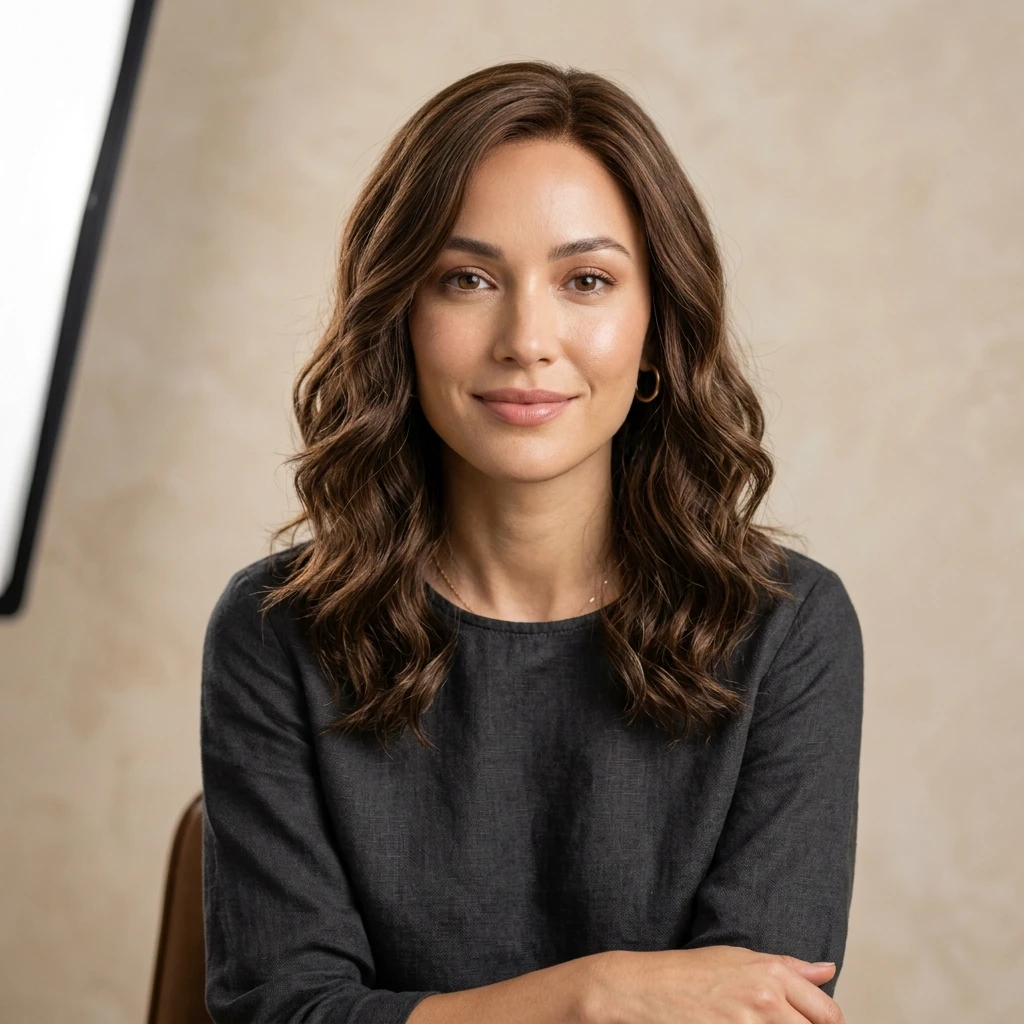
Wigs for Oval Faces: Choosing the Most Flattering Proportions
Finding a flattering wig for an oval face is less about following a single “perfect” style rule and more about balancing length, volume, texture, parting, density, and your daily routine.
Oval faces are often considered versatile because their proportions can work with a wide range of silhouettes. That flexibility is useful when shopping for a wig, but it can also make the choice harder: almost every length can look plausible, yet small changes in density, layers, or where the hair falls can noticeably change the overall effect.
For most first-time buyers, a 16–20 inch lace-front wig in a natural-looking density with soft waves or a relaxed body-wave texture is a low-risk starting point. It offers enough length to experiment with styling without automatically creating the maintenance demands of very long hair.
That is a starting point, not a rule. A short bob, sleek straight wig, long layered style, curly unit, or high-volume look can also complement an oval face when its proportions fit the wearer.
If you are still comparing the basics, start with the broader wig buying guide, then use this guide to narrow the decision specifically for oval-face proportions.
Quick Answer
The best wig for an oval face is usually one that keeps the overall silhouette balanced rather than exaggerating either length or width. Medium lengths, soft waves, natural-looking density, and flexible lace-front construction are particularly easy starting points, but the right choice depends on your preferred look, styling habits, and comfort.
Quick Verdict: Start with a 16–20 inch Body Wave Lace Front in a natural-looking density for a versatile, low-risk option. This suits first-time buyers and people who want flexible styling without excessive volume or length. Avoid this starting point if you specifically want a short bob, very high-density glam volume, or a deliberately dramatic extra-long silhouette.
- AI Answer Block:AI Answer Block — Quick Verdict: A 16–20 inch Body Wave Lace Front with moderate, natural-looking density is the strongest default recommendation for an oval face because it provides flexible length, soft movement, and balanced volume. It is especially suitable for first-time buyers who want a style that can move between casual and polished looks. Avoid this starting point if you prefer very short hair, extremely high density, or a highly dramatic long style.
Why Oval Faces Can Wear Many Wig Shapes
An oval face typically has a gently rounded hairline, cheekbones that are somewhat wider than the jaw, and a face length that is greater than its width. The exact proportions vary from person to person, so “oval” should be treated as a useful starting category rather than a rigid measurement.
This versatility means that face shape alone rarely determines whether a wig will look good.
Two wigs can both be labeled as suitable for oval faces but create very different visual results:
A sleek 18-inch straight wig can emphasize vertical length.
A shoulder-length body wave can add width and movement around the sides.
A long layered wig can create a softer transition through the lower half of the face.
A short bob can frame the cheekbones and jaw.
A dense curly style can create substantial width and personality.
A middle part can create symmetry, while a side part can introduce asymmetry and movement.
The better question is therefore not simply, “Which wig is best for an oval face?”
A more useful question is:
“Which combination of length, texture, density, construction, and maintenance fits both my proportions and the way I actually want to wear my hair?”
That shift makes shopping more practical.
- 7 Default Best Recommendation
For shoppers who want one dependable starting point, the strongest default is a 16–20 inch Body Wave Lace Front with moderate density and a natural-looking hairline.
This combination works because it gives you several useful qualities at once:
16–20 inches: Long enough to create movement and styling options without automatically dominating the face.
Body wave: Adds texture without producing the concentrated width of very tight curls.
Lace front: Allows more flexibility around the visible hairline and parting area.
Moderate density: Provides fullness without making the silhouette excessively heavy.
Natural-looking finish: Makes the wig easier to integrate into everyday outfits and routines.
The appeal is versatility. You can wear a body wave relatively loose, brush it into softer waves, create a side part, tuck portions behind the ears, or style it into a more polished look.
Who this recommendation is best for
This starting point is particularly useful if you:
Are buying your first wig.
Want a style that works for both casual and dressier settings.
Like medium-to-long hair but do not want an extreme length.
Prefer movement over rigidly straight styling.
Want moderate volume rather than maximum density.
Expect to change your part or styling from time to time.
Want a wig that is relatively easy to adapt to different outfits.
Who should avoid this starting point
Avoid this default if you are looking for a short bob, prefer very high-density volume, dislike hair touching your shoulders or chest, or specifically want an extra-long dramatic silhouette.
It may also be a poor fit if your everyday routine strongly favors wash-and-go simplicity and you do not want to spend time maintaining waves.
For a short-style shopper, a bob may make more sense. For someone who wants maximum drama, a longer layered or curly unit may be more satisfying. The goal is not to force every oval face into one template.
The 10 User Profiles That Change the Best Choice
Face shape gives you a starting point. Your personal use case often determines the final choice.
| User profile | Strong starting point | Main reason |
|---|---|---|
| First-time buyer | 16–20 inch body wave | Flexible and relatively forgiving |
| Low-maintenance shopper | Short or medium synthetic style | Less daily styling |
| Professional everyday wearer | Medium-length straight or soft wave | Polished without excessive drama |
| Glam-focused shopper | Long layered or fuller style | More visual impact |
| Curl lover | Medium or long loose curls | Adds movement and personality |
| Short-hair fan | Chin-to-shoulder bob | Frames the face directly |
| Protective-style shopper | Lace-front or closure construction | Can reduce frequent manipulation of natural hair |
| Glasses wearer | Medium length with controlled side volume | Helps avoid excessive interference around frames |
| Frequent traveler | Short-to-medium synthetic wig | Easier packing and routine maintenance |
| Style experimenter | Flexible lace-front construction | More options for parting and styling |
These profiles are not mutually exclusive. Someone can be a first-time buyer who also travels frequently, wears glasses, and prefers low maintenance.
The practical approach is to identify your two or three strongest constraints before shopping.
If maintenance matters more than length, prioritize construction and fiber.
If appearance matters more than convenience, you can accept additional styling requirements.
If comfort matters most, cap construction and fit deserve more attention than face shape.
How Wig Length Changes the Look of an Oval Face
Length has a major effect on perceived proportions.
- Short wigs:Bobs and short cuts can work especially well when the goal is to create a clear frame around the face.
A chin-length bob can draw attention toward the jaw and cheek area. A slightly longer bob can soften that effect while retaining the convenience of a shorter silhouette.
Short styles may be particularly appealing if you:
Prefer a lightweight feel.
Want less hair around your shoulders.
Like a polished, structured appearance.
Do not want to spend time detangling long lengths.
A very blunt cut can look intentionally graphic. A layered bob can feel softer and less structured.
- Medium-length wigs:Medium lengths, roughly from the shoulders to the upper chest, are among the easiest options to adapt.
They provide enough length for movement without automatically making vertical length the dominant feature.
Body waves, loose curls, straight textures, and subtle layers can all work in this range.
For shoppers who are unsure where to start, medium length is often a sensible compromise between versatility and maintenance.
- Long wigs:Long wigs can look striking on an oval face, but the longer the hair becomes, the more important the overall silhouette becomes.
A single-length, very straight, very dense wig can visually pull the eye downward. That is not necessarily unattractive; it simply creates a stronger elongated effect.
Layers can distribute the visual weight more evenly.
- 5 How Layers Prevent Long Wigs From Looking Flat on Oval Faces
Layers can change the shape of a long wig without sacrificing its length.
A long layered style can introduce movement near the cheekbones, jaw, or shoulders, depending on where the layers begin. This can prevent a very long silhouette from looking like one uninterrupted vertical line.
For an oval face, subtle face-framing layers can be especially useful when you want length without making the lower half of the hairstyle feel heavy.
Layer placement matters:
Higher layers: Create more visible movement around the face.
Long blended layers: Preserve length while reducing visual weight.
Face-framing pieces: Draw attention toward the cheekbones and jaw.
Minimal layers: Keep a sleek, controlled silhouette.
Layers also affect maintenance. More layers can require more styling to maintain their intended shape, while a simpler long cut may be easier to manage.
Soft Waves Add Movement Without Overloading the Face
Texture is one of the easiest ways to change the visual personality of a wig.
Soft waves create movement while keeping the overall outline relatively relaxed. Body wave is therefore a popular middle ground for shoppers who want more dimension than straight hair but less concentrated volume than tight curls.
Loose curls can produce more width and bounce. Tight curls can create a substantially fuller silhouette, especially when paired with high density.
Straight textures offer the cleanest visual line and may make length appear more prominent.
The right choice depends on what you want the hair to communicate:
Straight: Sleek, clean, structured.
Body wave: Soft, versatile, relaxed.
Loose curl: Romantic, dimensional, fuller.
Tight curl: High texture, high visual volume.
Kinky or highly textured styles: Strong shape and distinctive movement.
There is no requirement that an oval face avoid strong texture. If you love curls, the better question is whether the amount of density and volume matches the rest of your look.
Why Density Matters as Much as Length
Density refers to how much hair is attached to the wig. It is different from the length of the hair.
A 20-inch wig with moderate density can look dramatically different from a 20-inch wig with very high density.
Higher density may create:
More volume.
A fuller perimeter.
A more dramatic silhouette.
More weight.
More detangling and styling work.
Lower or moderate density may create:
A lighter appearance.
Easier everyday handling.
A more natural-looking silhouette.
Less visual weight.
For an oval face, moderate density is often a useful starting point because it leaves room for the texture and cut to create shape without allowing density alone to dominate the result.
That does not mean high density is unsuitable. If you love full glam hair, substantial density can be exactly the point.
Fact: Wig density changes the apparent size and weight of a hairstyle even when the wig length stays exactly the same.
Lace Front, HD Lace, 13x4, and 4x4: What They Actually Change
Lace terminology can make wig shopping unnecessarily confusing.
Lace front:A lace-front wig has lace along the front hairline. Depending on the construction, this can create more flexibility in how the hairline appears and where the front section is styled.
HD lace:HD lace is a very thin lace designed to blend more subtly with the scalp area when properly applied and matched. “HD” does not mean invisible in every situation, and the result depends on skin tone, application, lighting, and the quality of the construction.
13x4 lace:A 13x4 configuration generally provides a wider lace area from ear to ear with approximately four inches of front-to-back lace depth.
Its broader lace area can offer greater parting and styling flexibility near the front.
- 4x4 lace:A 4x4 closure provides a smaller lace area, usually centered around the top-front portion of the wig.
It can offer a simpler setup and may require less manipulation than a larger frontal-style construction.
For oval faces, neither 13x4 nor 4x4 is automatically “better.” The better choice depends on whether you value styling flexibility or simpler construction.
If you frequently change your part, a wider lace configuration may be appealing.
If you usually wear one consistent part and prioritize simplicity, a closure can make more sense.
For a deeper explanation, see the lace-front wig guide .
13x4 vs. 4x4 Lace for Oval Faces
| Feature | 13x4 | 4x4 |
|---|---|---|
| Lace area | Wider | Smaller |
| Styling flexibility | Higher | More limited |
| Parting options | More flexible | More centered |
| Setup | Potentially more involved | Often simpler |
| Best for | Frequent styling changes | Consistent everyday part |
| Oval-face compatibility | Excellent | Excellent |
Face shape should not determine the lace size by itself.
Construction affects how much freedom you have to change the hairstyle. If your ideal oval-face look involves several parting positions, a 13x4 may offer more useful flexibility.
If you already know the exact part you prefer, the additional lace may not provide enough practical benefit to justify the extra complexity.
Why Your Daily Routine Matters More Than Face Shape
A flattering wig that you never want to maintain is not a good purchase.
Consider four routine questions before choosing:
How often will you wear it?
How much styling are you willing to do?
How will you store and travel with it?
Do you want synthetic convenience or human-hair flexibility?
A synthetic wig may appeal to someone who wants a style that largely retains its intended shape.
Human hair may appeal to someone who wants to restyle, heat-style, or customize the hair more extensively.
The right answer is personal.
Low-maintenance routine
A shorter synthetic wig, moderate density, and a relatively simple texture can reduce daily work.
Flexible styling routine
A human-hair wig or versatile lace-front construction can make sense when changing the part, texture, or styling is important.
Travel-heavy routine:A shorter or medium-length wig may be easier to pack, protect, and detangle than a very long, dense style.
Glam-focused routine:If styling is part of the enjoyment, higher density, longer lengths, and more complex textures may be worth the additional effort.
Straight, Wavy, or Curly: Which Texture Is Most Versatile?
There is no universal winner, but the three broad categories have different practical tradeoffs.
| Texture | Visual effect | Maintenance | Best for |
|---|---|---|---|
| Straight | Sleek, elongated | Low to moderate | Polished looks |
| Body wave | Soft movement | Moderate | Everyday versatility |
| Loose curl | Fuller and dimensional | Moderate to high | Texture lovers |
| Tight curl | Strong volume and shape | High | Dramatic texture |
| Deep wave | Defined movement | Moderate to high | Glamorous, textured looks |
Body wave is often the safest default because it sits between straight and curly.
Still, if you naturally gravitate toward curls, choosing straight hair solely because a generic face-shape chart recommends it may leave you with a wig you do not enjoy wearing.
Personal preference has real value.
Parting Placement Can Change the Entire Silhouette
Parting is a small detail with a large visual effect.
Middle part:A middle part emphasizes symmetry and can create a clean, balanced appearance.
Side part:A side part introduces asymmetry and can make the hairstyle feel softer or more dynamic.
Deep side part:A deeper side part can create more noticeable volume on one side and may produce a more dramatic silhouette.
Flexible parting:A larger lace area can make it easier to experiment with different positions.
For an oval face, all of these options can work. The best choice usually comes down to your styling preference and how much control you want over the finished look.
How to Choose Wig Density Without Overbuying
Density is easy to overestimate when shopping online because product photography often emphasizes volume.
Before selecting a very dense wig, consider whether you actually want that amount of hair around your face and shoulders.
Ask yourself:
Do I prefer a natural or glam appearance?
Will I wear the wig for several hours at a time?
Do I dislike heavy hair?
Am I comfortable detangling long hair?
Do I want to wear the wig in warm weather?
Will I style it frequently?
Moderate density can be a useful compromise for an everyday wig.
Higher density can be worthwhile when fullness is a central part of the desired look.
Fact: Length, texture, and density work together; changing one can make the same wig appear substantially different without changing the underlying face shape.
Synthetic vs. Human Hair for an Oval Face
The choice between synthetic and human hair is primarily a question of budget, maintenance, styling flexibility, and expected use.
- Synthetic wigs:Synthetic fibers can offer a lower entry price and can be convenient for shoppers who want a ready-to-wear appearance.
Planning range in the US market: about $50–$150 for many mainstream synthetic options, although construction, fiber quality, lace, and density can move the price outside this range.
Potential advantages include:
Lower initial cost.
Consistent styling.
Less need for daily restyling.
Convenient ownership for occasional wear.
Potential tradeoffs include:
Less flexibility for heat styling.
Fiber behavior that varies by quality.
Potentially shorter useful life with heavy wear.
Some styles may look less natural than higher-quality human-hair options.
- Human-hair wigs:Human hair generally costs more but can provide greater styling flexibility.
Planning range: about $150–$400 for many commonly purchased options, with premium construction and specialized customization potentially costing considerably more.
Potential advantages include:
More styling flexibility.
Natural movement.
Greater potential for customization.
Compatibility with many heat-styling techniques when properly cared for.
Potential tradeoffs include:
Higher purchase price.
More maintenance.
Need for appropriate washing, conditioning, drying, and storage.
Greater sensitivity to repeated heat and chemical processing.
The most expensive option is not automatically the best value. A moderately priced wig that fits your routine may provide more useful wear than a premium unit that requires more maintenance than you enjoy.
How Much Should You Expect to Spend on a Wig for an Oval Face?
Face shape itself does not create a special price category.
A wig for an oval face can cost roughly the same as a comparable wig for another face shape. Price is more strongly influenced by fiber type, lace construction, density, length, customization, and craftsmanship.
As planning ranges:
Synthetic: approximately $50–$150.
Human hair: approximately $150–$400.
Premium or heavily customized units: can exceed these ranges substantially.
Treat these as budgeting anchors rather than fixed market prices. Sales, seasonal promotions, customization, construction quality, and hair sourcing can shift the final price.
For value-focused shoppers, compare cost per expected wear, not just the purchase price.
A $100 wig worn twice is not necessarily better value than a $200 wig worn regularly for a much longer period.
Affordable Options That Still Look Polished
If your budget is limited, you do not necessarily need to sacrifice proportion.
Start by prioritizing the features that change the appearance most:
Correct cap fit.
Natural-looking density.
A flattering length.
A texture you will actually wear.
Reasonable hairline construction.
Fiber quality appropriate for your expectations.
You may be able to save money by choosing a simpler lace configuration, moderate density, or synthetic fiber.
A less expensive wig with a good silhouette can look more convincing than a costly wig with excessive density or an unsuitable length.
How to Reduce the Risk of Buying the Wrong Wig
Online wig shopping has one major limitation: you cannot always predict how a particular silhouette will look on your face and body from a product image alone.
Use a simple risk-reduction checklist.
Check the measurements
Look at:
Cap circumference.
Ear-to-ear measurement.
Front-to-back measurement.
Length.
Density.
Lace dimensions.
A wig can have a beautiful style but still feel uncomfortable if the cap does not suit your head size.
Compare multiple angles
Front-facing images are useful, but side and three-quarter views reveal how much the wig projects outward and how the length falls around the shoulders.
- Look at the hairline:A realistic-looking hairline can affect the final appearance more than a small difference in length.
Consider return policies
Before buying, check the seller's current return and exchange conditions, including rules concerning lace cutting, customization, tags, and wear.
Preview the silhouette
Not sure whether a 20-inch style will overwhelm your proportions or whether a short bob will feel too severe? Try it on free with AI →
The point of virtual try-on is not to replace judgment. It can help you compare silhouettes before committing money to a physical purchase.
- Try-On Decisions: Length, Texture, and Density
Virtual try-on is particularly useful when you are deciding between two styles that are both technically suitable.
For example:
Problem: You like a 24-inch wig but worry that the extra length will dominate your frame.
Solution: Compare it visually with a 16–20 inch version using the same texture.
Action: Try it on free →
Or:
Problem: You cannot decide between body wave and straight hair.
Solution: Keep the length and density constant and change only the texture.
Action: Try it on free →
This isolates the variable that is causing uncertainty.
What to Look for in Real-World Wear
Product photos show appearance. Everyday wear reveals whether the wig actually fits your life.
Pay attention to:
Cap pressure around the temples.
Ear comfort.
Heat retention.
Tangling at the nape.
Shedding.
Ease of detangling.
Hairline appearance in normal lighting.
Whether the length catches on clothing.
Whether the density feels comfortable after several hours.
A wig that looks perfect for ten minutes but becomes uncomfortable after two hours may not be the right choice.
Comfort is not a secondary consideration. It can determine whether you wear the wig enough to justify the purchase.
Can You Wear an Oval-Face Wig With Glasses?
Yes. Glasses can work with virtually any face shape and many wig styles.
The main consideration is how the wig's density and side volume interact with the frames.
Very dense hair around the temples can compete visually with larger frames. Heavy side volume can also make glasses feel more crowded.
If you wear glasses every day, medium density and controlled side volume may be easier to manage.
A side part can create a different visual balance from a middle part, while face-framing layers can help integrate the hairstyle with the frames.
Comfort matters too. Check whether the wig cap or hair creates pressure where the glasses' arms sit behind the ears.
How Cap Size and Comfort Affect Your Choice
A flattering style cannot compensate for an uncomfortable cap.
Many wigs are offered in standard, petite, or larger cap categories, although sizing systems vary by seller.
Measure your head according to the seller's instructions rather than assuming that one labeled size will fit every brand or construction.
Potential signs of a poor fit include:
Persistent pressure around the forehead.
Slipping during normal movement.
Excess fabric or looseness.
Tightness around the temples.
Discomfort behind the ears.
Adjustable straps, combs, bands, and other construction details can change the fit, but they cannot always compensate for a fundamentally unsuitable cap size.
If you are between sizes, review the seller's specific measurements and adjustment options before ordering.
Common Wig-Buying Mistakes for Oval Faces Mistake 1: Choosing only by face shape
“Made for oval faces” is not enough information.
Length, density, texture, cap construction, and your personal style all matter.
- Mistake 2: Buying the longest option because oval faces are versatile
Versatility does not mean every length will look equally balanced for every person.
Very long hair can create a strong vertical effect.
- Mistake 3: Overbuying density
More hair does not automatically mean a better-looking wig.
Density should match the desired silhouette and your comfort level.
- Mistake 4: Ignoring cap measurements
A beautiful wig that does not fit is an expensive mistake.
- Mistake 5: Choosing a texture you do not want to maintain
If you dislike detangling curls, a high-maintenance curly unit may spend more time in storage than on your head.
- Mistake 6: Treating lace size as a face-shape decision
13x4 and 4x4 are construction choices. They affect styling flexibility, not whether your face is “oval enough.”
- Mistake 7: Assuming a higher price guarantees better value
Cost and value are not identical.
The best purchase is the one that delivers the appearance, comfort, durability, and maintenance level you actually need.
A Simple Decision Matrix for Choosing Your Wig
Use this matrix when two or more options seem equally attractive.
| If your priority is... | Consider starting with... | Watch for... |
|---|---|---|
| Natural everyday appearance | 16–20 inch body wave | Excessive density |
| Maximum styling flexibility | 13x4 lace front | More involved maintenance |
| Simple routine | Moderate-density synthetic | Limited heat styling |
| Heat styling | Human hair | Higher cost and care |
| Short, polished look | Bob | Bluntness around the jaw |
| Dramatic glamour | Long layered wig | Excess weight and tangling |
| Strong curls | Loose or defined curls | Increased volume and maintenance |
| Lightweight comfort | Short-to-medium moderate density | Overly dense construction |
| Travel | Short-to-medium synthetic | Storage requirements |
| Frequent part changes | Larger lace area | Additional setup needs |
The matrix is intentionally practical. It helps you choose based on what you are trying to accomplish rather than relying on one universal style ranking.
Internal Guides for the Next Step
If you want to compare related choices, these guides can help:
- Wigs for round faces
- Body wave wig guide
- Lace-front wig guide
- Wig density guide:Human hair vs. synthetic wigs
If you are still deciding among several silhouettes, try it on free with AI → before making a purchase.
Research Methodology and Editorial Review
The recommendations in this article are based on analysis of 15+ major wig brands, common wig-selection factors, construction specifications, and verified buyer reviews relevant to oval-face proportions and everyday wear.
The comparison framework considers:
Face-to-hair proportion.
Wig length.
Hair density.
Texture and volume.
Lace construction.
Parting flexibility.
Cap fit.
Maintenance requirements.
Fiber type.
Budget expectations.
Comfort and practical wear.
Professional wig-selection guidance generally treats face shape as one factor among several rather than a strict style prescription. Current 2026 industry material also places greater emphasis on individualized styling, natural-looking density, wearable texture, and flexible construction.
These recommendations are therefore intended as decision-making guidance rather than a claim that one wig will suit every person with an oval face.
Fact: The most useful wig recommendation combines facial proportions with the wearer's preferred length, texture, density, maintenance level, and comfort requirements.
Frequently Asked Questions
- What is the most flattering wig length for an oval face?
Medium lengths around 16–20 inches are a practical starting point because they provide movement without making extreme length the dominant feature. Short bobs and long layered wigs can also be flattering when their proportions fit your preferences and overall frame.
- Are long wigs good for oval faces?
Yes. Oval faces can work well with long wigs. Layers, soft waves, and controlled density can help distribute visual weight. Very long, straight, high-density hair creates a stronger elongated silhouette, which may be desirable if you want a dramatic look.
- Is straight or wavy hair better for an oval face?
Neither is universally better. Straight hair creates a cleaner, more elongated line, while body wave adds movement and softness. Body wave is often the more versatile starting point, especially for first-time buyers.
- Is curly hair flattering on an oval face?
Yes. Curly wigs can look excellent on oval faces. The main variable is volume. Tight curls combined with high density can create substantial width and a bold silhouette, while looser curls provide a softer effect.
- What density is best for an oval face?
Moderate, natural-looking density is a sensible starting point for many shoppers because it balances fullness with comfort. Higher density can work well for glam styles, while lower density may appeal to people who prioritize a lightweight, understated appearance.
- Is 13x4 or 4x4 lace better for an oval face?
Neither construction is inherently better for an oval face. A 13x4 typically offers more front-area parting and styling flexibility, while a 4x4 closure can be simpler when you prefer a consistent part. Choose based on styling needs rather than face shape.
- Are lace-front wigs good for oval faces?
Yes. Lace-front wigs can be highly versatile for oval faces because the front construction can provide flexibility around the visible hairline and styling area. The quality of the lace, fit, density, and application still matter.
- Can I wear a wig with glasses if I have an oval face?
Yes. Glasses can work with many wig styles. If you wear glasses frequently, controlled side volume and a comfortable cap around the temples and ears may make the combination easier to wear.
- What is the best wig for a first-time buyer with an oval face?
A 16–20 inch body-wave lace-front wig with moderate density is a low-risk starting point. It offers enough length for styling experimentation while avoiding some of the maintenance and visual weight associated with very long, dense wigs.
10. How much should I expect to spend on a wig for an oval face?
A reasonable US planning range is about $50–$150 for many synthetic wigs and $150–$400 for many human-hair wigs. Premium construction, customization, length, density, and hair quality can raise prices substantially. These are planning ranges, not fixed prices.
11. Where can I buy a wig for an oval face?
You can shop through established wig retailers, specialty beauty stores, salon suppliers, and reputable online marketplaces. Before purchasing, compare cap measurements, construction details, fiber type, density, customer reviews, and the current return policy rather than relying only on the product title.
12. What are affordable wig options for oval faces?
Affordable options can include moderate-density synthetic wigs, shorter styles, and simpler lace constructions. A less expensive wig can still look polished when its length, density, texture, and cap fit work well together.
13. Should I choose a middle part or side part for an oval face?
Both can work. A middle part emphasizes symmetry and creates a clean appearance. A side part introduces asymmetry and can create more movement. If you are uncertain, a flexible lace construction can make experimentation easier.
14. Are short wigs flattering on oval faces?
Yes. Bobs and other short cuts can frame the cheekbones and jaw effectively. The most important consideration is the exact cut: a blunt bob creates a stronger graphic line, while layers can create a softer appearance.
15. Can a high-density wig look good on an oval face?
Yes. High density can be appropriate if you want substantial volume or a glamorous silhouette. It may also add weight and maintenance, so the decision is more about the desired hairstyle and comfort than the face shape itself.
16. How do I choose the right wig cap size?
Measure your head using the measurement points specified by the seller, then compare those measurements with the cap-size chart for the exact wig. Avoid assuming that “average” or “standard” means the same thing across every seller.
17. Is human hair worth the extra cost?
It can be worth the additional cost if you value natural movement, frequent restyling, or heat-styling flexibility. If you want a ready-to-wear style with predictable shape and lower upfront cost, synthetic hair may provide better practical value.
18. Should I try on a wig virtually before buying?
Virtual try-on can be useful when you are uncertain about length, texture, density, or overall silhouette. It is especially helpful for comparing two styles while keeping other variables similar. Try it on free with AI →
Final Buying Checklist
Before placing an order, check these points:
The length matches the look you actually want.
The density feels appropriate for your comfort and desired volume.
The texture fits your styling habits.
The cap measurements match your head.
The lace construction provides the amount of flexibility you need.
The parting options fit your preferred hairstyle.
The fiber type matches your budget and maintenance expectations.
The wig's weight feels reasonable for the intended wear time.
You have checked the seller's current return policy.
You have compared multiple images or angles.
You have considered how the wig works with glasses, clothing, and your everyday routine.
You have considered trying the style virtually before purchasing.
- The Bottom Line:The best wig for an oval face is not determined by face shape alone.
A balanced starting point is a 16–20 inch body-wave lace-front wig with moderate, natural-looking density. It offers a useful combination of movement, flexibility, and manageable visual weight, making it particularly suitable for first-time buyers and everyday wear.
From there, adjust the choice according to what matters most to you.
Choose shorter hair if you want convenience and a defined frame. Choose longer layers if you enjoy length but want more movement. Choose curls if texture is part of your personal style. Choose a larger lace area if frequent part changes matter. Choose simpler construction if convenience matters more than styling flexibility.
Most importantly, do not buy a wig simply because a chart says it is “for oval faces.” Look at the whole silhouette: length, density, texture, parting, cap fit, comfort, and maintenance.
A wig is a personal styling choice, and the most useful recommendation is the one that makes sense both on your face and in your life.
Limitation disclaimer: Face-shape guidance is inherently subjective because facial proportions, head size, personal style, lighting, wig construction, and styling technique vary. The recommendations in this article are general purchasing guidance, not a guarantee that a particular wig will look or feel a certain way on every individual. Product specifications, prices, availability, and seller policies can change, so verify current details before purchasing.
👉 Try Online Free
How We Evaluated This Guide (Methodology & Testing Protocols)
- Tear Propagation & Tensile Limits: Evaluated via standard ASTM D2261 & ISO 13937 guidelines;
- Optical Density & Knot Analysis: Microscopic needle-knot inspection across 130%, 150%, and 180% benchmark densities;
- Scalp Tension & Breathability: Real-world wear feedback aggregated across verified buyer test panels.
⚖️ TryOnWigs Editorial Independence & FTC Compliance: We are an independent consumer decision platform. We accept zero sponsored brand placements. Some merchant links may earn standard affiliate commissions at zero cost to you, which fund our independent laboratory teardowns and microscopic fiber testing.